A commercial lease reads like a real estate document: square footage, rent escalations, common area charges, a term and a renewal option. For a business in a regulated industry, it is also a regulatory document, and that half of it can get less scrutiny. A space can be affordable, well located, and available today, and still be the wrong space, because nothing in the lease itself tells you whether the use is allowed once the license application is filed.
This article is the overview for the property decision: the gap between a space that looks right and a space that is right, five questions worth answering before a signature goes on the lease, and a staged sequence for working through them.
The gap between “available” and “usable”
A listing does not establish regulatory suitability for your proposed use. It tells you what a space costs and roughly what it is zoned for, and a broker may be able to point to a similar business operating nearby. None of that confirms that your specific licensed use is permitted on that specific parcel, under the ordinance in effect today, with the buffers and conditions that apply to your license.
The distance between “available” and “usable” is where regulated businesses can lose months. A landlord signs a letter of intent, a deposit changes hands, and only during the license application does anyone confirm that the parcel sits inside a buffer zone, or that the jurisdiction capped the number of licenses in that district last year, or that the building’s occupancy classification does not match the intended use. By then, the lease may be signed and rent may be running on a space that cannot open.
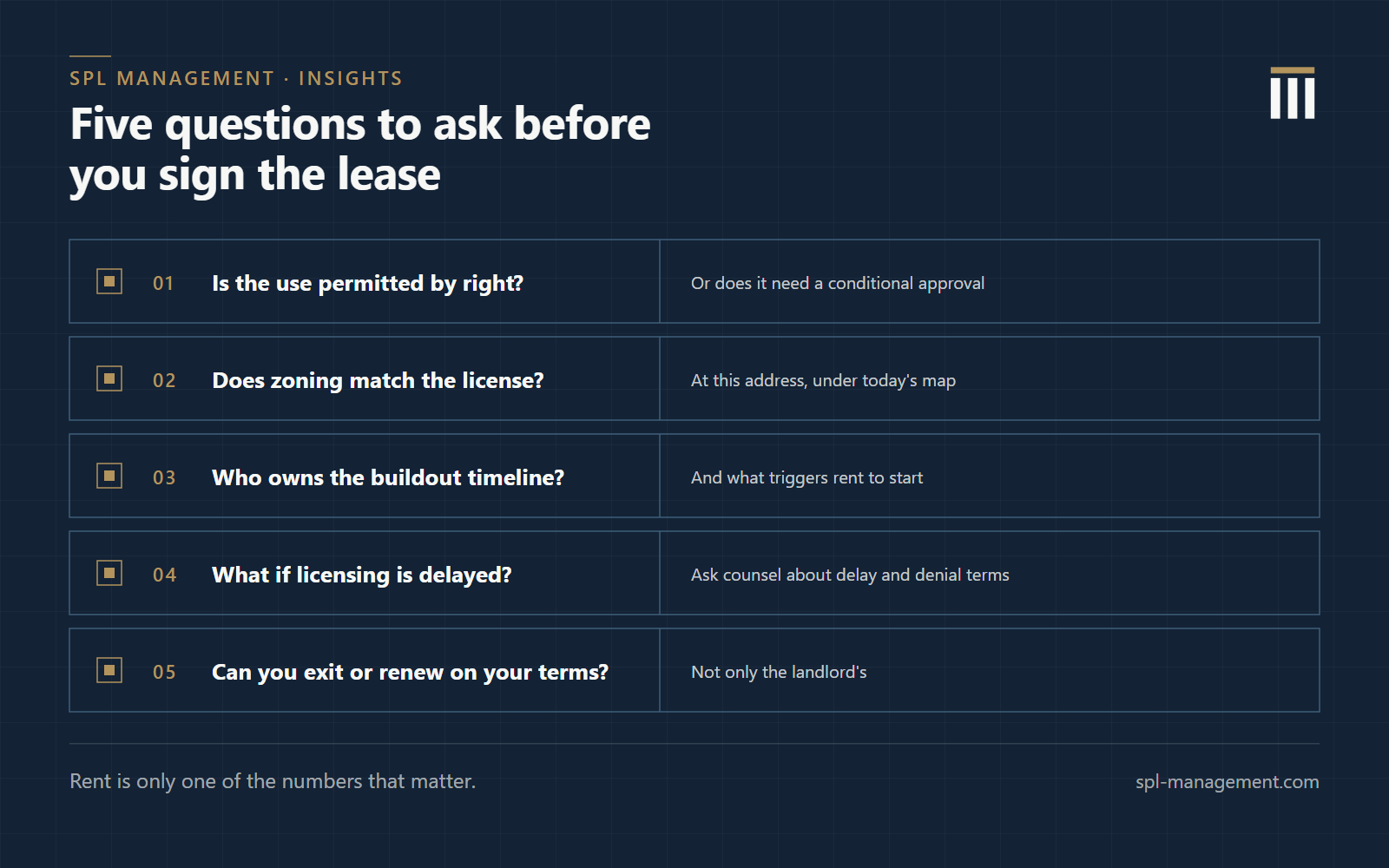
Five questions the lease itself will not answer
Is the use permitted by right, or does it require a conditional approval? A space can sit in a zone that technically allows your industry while still requiring a conditional use permit, a public hearing, or a variance. Those processes can add months and are not guaranteed to succeed. Know which situation you are in before the deposit is non-refundable.
Does the zoning match the license, at this address, today? Zoning maps change, buffer requirements around schools and other sensitive uses can shift, and local caps on the number of permitted operators can be adjusted. A use that was allowed at that address two years ago may not be allowed there now.
Who owns the buildout timeline, and what triggers rent? Regulated buildouts can involve inspections, security requirements, and equipment that a standard commercial buildout does not. If rent starts on a fixed date rather than on the date the space is licensable, each week of regulatory delay can be a week of rent with no revenue behind it.
A space can be affordable, well located, and available today, and still be the wrong space, because nothing in the lease tells you whether the use is allowed once the license application is filed.
What happens if licensing is delayed or denied? A standard commercial lease form may assume the tenant will occupy on schedule, and may not address what happens if a license is delayed by a moratorium, denied, or approved with conditions that change the intended use. The tenant’s exposure depends on the lease and applicable law; ask counsel to review delay, denial, and termination provisions, and whether licensing contingencies and related timing protections are appropriate and negotiable.
Can you exit or renew on your terms, not only the landlord’s? A five-year lease with no early termination right can outlast a shift in regulation, a market downturn, or a decision to consolidate locations. Renewal terms deserve the same attention as the initial rent. Renewal leverage depends on alternatives, vacancy risk, lease rights, and market conditions, and your broker and counsel are the right people to assess it.
Why this gets missed
The cause is less carelessness than speed. Real estate decisions in a growing business move quickly, often under pressure from a limited window of licenses, a landlord with other interested tenants, or a board that wants to see expansion progress. The commercial lease terms get reviewed closely because that is familiar territory. The regulatory fit can end up resting on a verbal assurance, because verifying it properly means involving people who are not normally part of a real estate deal.
Multi-site operators face a compounding version of this problem. The team that signed the first three leases learned the local rules by trial and error. By the time a fourth or fifth location is under consideration, that knowledge may not have been written down anywhere, so each new deal repeats some of the same risk.
A staged sequence for checking a location
The five questions above are easier to answer in order, with each stage finished before money or signatures are committed at the next one:
- Screen the address. Before a tour turns into a letter of intent, check zoning, the use classification, nearby sensitive uses, and any local caps or moratoriums. The Site Screening Worksheet lays out the checks.
- Confirm with the jurisdiction. Put the screening results to the planning and licensing offices directly rather than relying on a listing or a verbal summary. Record who confirmed what, and on which date.
- Check the landlord. Before signing, confirm who owns the property, who can sign for the owner, and whether a lender or other party must consent to your use. The Landlord Due Diligence Checklist covers the questions to ask, with counsel verifying the answers.
- Review the lease with counsel. Use clause, rent commencement, licensing contingencies, alteration consents, assignment, and renewal. The Lease Review Checklist for Regulated Tenants lists the clauses and dates to raise.
- Assign one owner for the timeline. After signing, one person should be accountable for keeping licensing and construction moving together, since a building that is finished but not licensable earns no revenue.
Start these checks early and build time for unresolved questions into the decision timetable. Done in parallel with the real estate work rather than after it, they give the deal that looks good on the rent roll a better chance of holding up when the license application is reviewed.
Before you sign
SPL Management coordinates the regulatory side of site selection and facilities work for licensed businesses in the United States and Canada through Real Estate & Facilities Management, working alongside your broker and counsel. If you have a site under consideration, the consultation is a 30-minute call to talk through the checks involved and where SPL fits.
General information only, current as of the last review on September 26, 2026. Rules vary by jurisdiction and change often. This is not legal, tax, or real estate advice; confirm current requirements with the regulator or a qualified professional before acting. How we write and review articles.
Keep reading
Real Estate
Due Diligence on a Landlord: Why the Other Side of the Lease Matters Too
· 5 min read
Real Estate
Lease Renewal Preparation for Cannabis and Tobacco Retailers
· 5 min read
Real Estate
Local Moratoriums and Caps: What They Mean for Expansion Plans
· 6 min read